
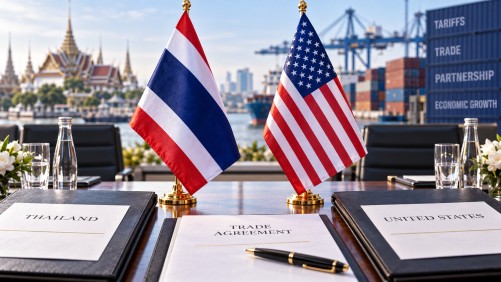
Thailand is pushing forward with negotiations on a reciprocal trade agreement with the United States as it seeks to shield its exporters from potential tariff hikes. This comes amid concerns over a 12.5% tariff imposed by the US under Section 301, linked to imports produced using forced labor.
Prime Minister Anutin Charnvirakul is expected to address these trade issues and tariff conditions directly with US President Donald Trump. While no firm deadline exists for finalizing the Agreement on Reciprocal Trade (ART), discussions persist over unresolved matters.
The US has launched an investigation into structural excess production capacity, which could lead to further duties on Thai exports. This investigation, initiated in March 2026, involves Thailand and other key trading nations. In response, Thai officials have provided data to counter US concerns, asserting that production capacities in certain sectors exceed US estimates and warrant a reassessment.
Thailand aims to secure tariff arrangements comparable to those of regional peers like Malaysia and Indonesia. Officials suggest that an ART could enhance market access and provide stability for Thai exporters, though the exact tariff terms are still under negotiation.
The prospective agreement also seeks to address US concerns regarding trade barriers, investment, and access to Thailand’s markets. Any finalized deal would need to undergo Thailand’s domestic approval processes before implementation.