
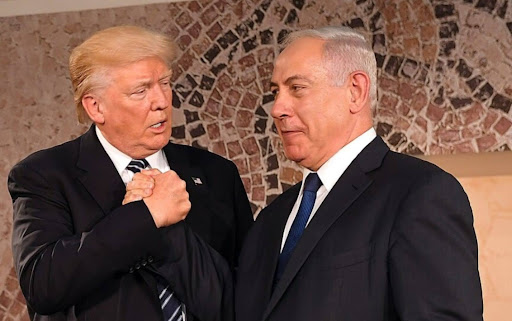
From the initial disclosure that US President Donald Trump had warned Israeli Prime Minister Benjamin Netanyahu not to strike Iran’s South Pars gas field — and that Netanyahu had done it anyway — through the cascading consequences of Iranian retaliation, Gulf state pressure, Director of National Intelligence Tulsi Gabbard’s congressional confirmation of different objectives, and the ongoing management of a complex alliance under the pressures of active war, the story of the Trump-Netanyahu Iran campaign has offered a sustained and unusually transparent window into how major military alliances actually operate under pressure.
It has taught us that coordination is not authorization. The two militaries share information and coordinate extensively — confirmed by US officials themselves — and yet Israel was able to strike a major target that Trump had explicitly opposed. The coordination is real; the American veto is not.
It has taught us that public deference is not strategic submission. Netanyahu’s “He’s the leader. I’m his ally.” is genuine in its relational sincerity and limited in its operational implications. Calling Trump the leader and acting alone on a major military strike are not contradictory — they are two sides of a relationship managed with considerable skill.
It has taught us that shared enemies do not guarantee shared strategies. Trump and Netanyahu both see Iran as a serious threat. They are fighting that threat with different methods, toward different endpoints, on different timelines. The shared enemy provides enough common ground to sustain the alliance; the different strategies generate enough friction to challenge it regularly.
It has taught us that official candor, when it comes, carries weight. Gabbard’s congressional confirmation of different objectives is the most important single statement about the Trump-Netanyahu alliance that the current conflict has produced. Her directness changed what could be officially denied and what the alliance must now publicly account for.
And it has taught us that alliances between powerful democratic partners, however strong, are never perfectly unified. The Trump-Netanyahu partnership is more powerful than any alternative arrangement either government has available. It is also more internally complex, more strategically divergent, and more honestly imperfect than its official presentation had previously acknowledged. That honest imperfection is not a vulnerability — it is simply the truth about how consequential alliances operate in the real world.