
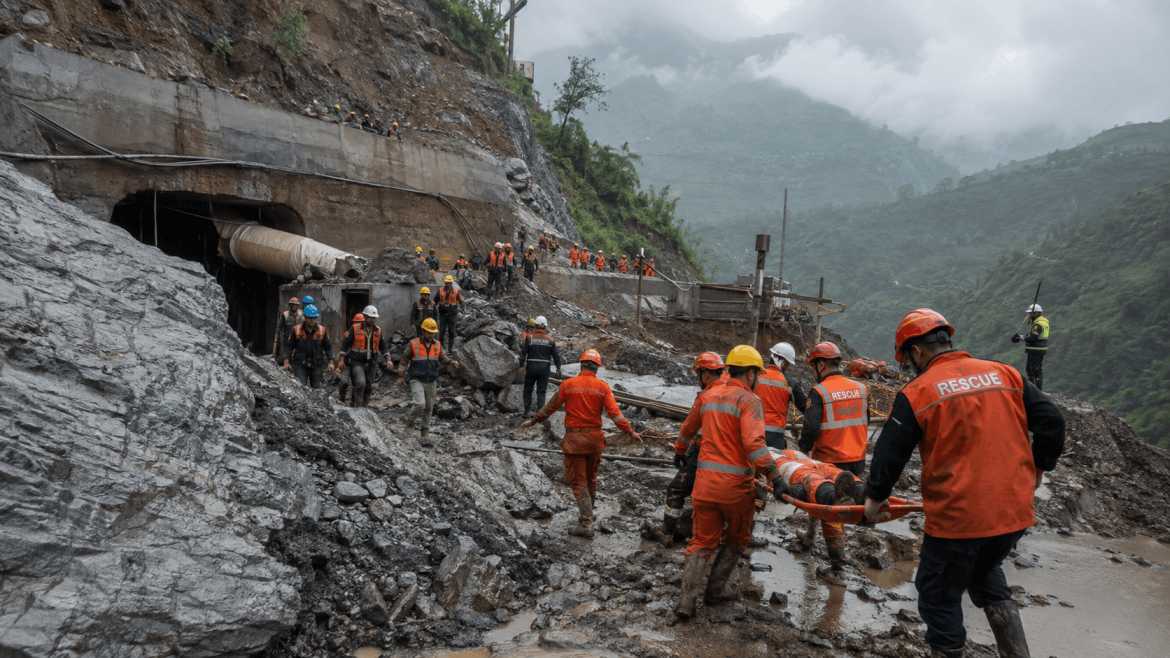
In the wake of devastating flash floods in Nepal, rescue teams are racing against time to reach more than 900 hydropower workers believed to be trapped in underground tunnels spanning a dozen power projects. The disaster’s death toll in Nepal has surged to approximately 940, with additional casualties reported in Tibet, while thousands remain missing on both sides of the border. The floods have severely impacted the Rasuwa and Nuwakot districts, where around 500 workers are feared stuck in tunnels at hydropower sites. Survivors who escaped the initial flooding have reported that many colleagues were unable to flee in time.
The rescue operations face immense challenges, including damaged infrastructure, such as destroyed bridges, and the unpredictable nature of river flooding. The treacherous terrain has forced teams to rely heavily on helicopter support, while neighboring countries have provided temporary bridge equipment to aid access. Rescuers are contending with significant obstacles, including massive debris blocking tunnel entrances, prompting the use of blasting techniques to clear paths toward the trapped workers. The disaster has also severely impacted Nepal’s power generation capabilities, further complicating the recovery efforts.
Inside the tunnels, conditions are dire, with rescuers reporting mud levels reaching chest height and visibility severely impaired. Despite these grim circumstances, there is cautious optimism among some rescue workers that certain safe zones in the tunnel systems could have provided refuge for some workers. However, experts caution that the diminishing oxygen levels inside the tunnels are decreasing the likelihood of finding survivors as time passes.
The broader impact of the flooding has been catastrophic, affecting tens of thousands of people and wiping out entire communities. This disaster has sparked renewed concern over the role of climate change in destabilizing glacial and mountain regions. Nepal’s leaders have called the flooding an unprecedented natural disaster, mobilizing tens of thousands of security personnel and volunteers in a massive response effort. International assistance has been forthcoming, with specialized rescue teams, funding, and technical support arriving from neighboring countries, underscoring the scale of the crisis. Amidst the devastation, a glimmer of hope emerged when rescuers managed to pull a young child alive from the mud.
There is growing concern among officials about the sharing of glacier and water-level data between neighboring countries, as gaps in information exchange could hinder future disaster preparedness in the region. This issue highlights the need for improved coordination and communication to better anticipate and respond to such natural catastrophes in the future.