
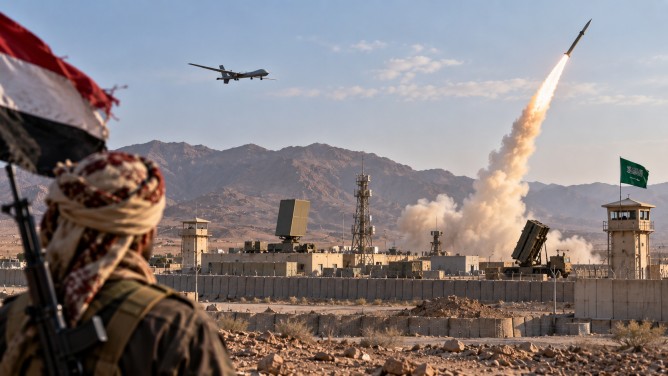
Iran-backed Houthi fighters have launched a missile and drone strike on a military base in southern Saudi Arabia, further escalating clashes with Yemeni government forces and prompting more civilians to flee the violence. The Houthi military spokesperson, Yahya Saree, claimed the attack targeted weapons depots and command-and-control centers at the Sharurah military base. Saudi civil defense authorities confirmed that a projectile landed near the border with Yemen, injuring two individuals and causing damage to a mosque and several buildings.
In response, Yemeni government forces have ramped up their offensive against Houthi positions, conducting three airstrikes in the Taiz region and targeting Houthi locations and armaments near the Red Sea port city of Mocha. These developments follow a significant Houthi offensive over the past week, during which the group captured a substantial portion of Yemen’s Red Sea coast and several strategic islands, thereby bolstering their control near the Bab al-Mandab Strait—a vital maritime passage at the southern entrance of the Red Sea.
The Houthis have also declared a maritime blockade on Saudi Red Sea ports, heightening concerns about the impact on regional shipping and energy supplies. This waterway has gained increased importance for Saudi oil exports, especially amid ongoing disruptions in the Strait of Hormuz. Saudi Arabia continues its support for Yemen’s internationally recognized government, while the Houthis maintain their alignment with Iran, fueling further tensions across the region.
The intensifying conflict has precipitated a major humanitarian crisis, with tens of thousands of people displaced from their homes since the latest hostilities began. Many of these civilians are struggling to find refuge in safer areas. According to the United Nations, there has been a significant rise in displacement since July, and the recent fighting has reportedly resulted in over 500 fatalities. The ongoing violence threatens to exacerbate Yemen’s existing humanitarian challenges and further destabilize the broader Red Sea region.