
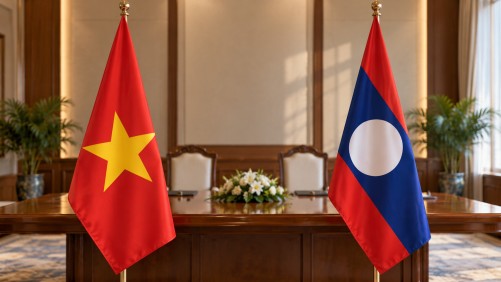
Vietnamese Prime Minister Lê Minh Hưng, during his official visit to Laos, met with Lao National Assembly President Sonexay Siphandone on October 8 in Vientiane to reaffirm the commitment of both nations to strengthen their bilateral relations. This meeting, marking Hưng’s first visit to Laos since becoming prime minister, emphasized the importance of the longstanding friendship and strategic partnership between the two neighboring countries.
The leaders acknowledged progress across various sectors such as political relations, defense, security, foreign affairs, trade, and investment. They also recognized the significance of cooperation in education, transport, energy, culture, and people-to-people exchanges as vital components of their bilateral relationship. Both sides agreed to focus on implementing existing agreements and commitments made by their senior leaders, aiming to transform diplomatic understanding into concrete outcomes.
Prime Minister Hưng urged the Lao National Assembly to support policies that would facilitate the mobilization of public and private resources, improve the implementation of development projects, and create favorable conditions for Vietnamese and Lao businesses operating in each other’s markets. The leaders stressed the importance of stronger cooperation between their national legislatures, including delegation exchanges and sharing legislative experiences, as well as closer coordination at regional and international parliamentary forums.
In addition to economic and legislative cooperation, the leaders highlighted the importance of people-to-people exchanges, particularly among younger generations, to promote awareness of their shared history and strengthen public understanding of their longstanding friendship. Discussions also included preparations for the Vietnam–Laos and Laos–Vietnam Year of Solidarity, Friendship, and Cohesion in 2027, marking the 65th anniversary of diplomatic relations and the 50th anniversary of the Treaty of Amity and Cooperation.
Both leaders reaffirmed that maintaining strong bilateral ties remains strategically important amid changing regional and international conditions. They pledged to continue coordinating on development priorities and implementing agreements that deliver tangible benefits for the people of both countries.